
Emergency Kit
72-hour Emergency Kit
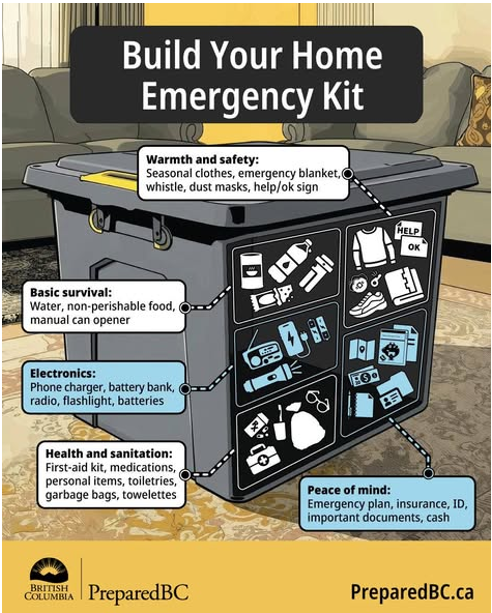
Every household should have an emergency kit to sustain them for at least 72 hours, preferably one week. The kit contains enough food and water for all family members and pets as well as seasonal clothing, medications, toiletries, copies of important documents, first aid supplies, flashlight, radio, and other items.
The kit is meant to sustain the household if they need to shelter in place (for example, during a storm or extended power outage), or if they need to leave home in case of an evacuation.
Put supplies in one or 2 containers, such as plastic bins or duffel bags. Store them in an area of your home that’s easy to get to, such as a hall closet, spare room or garage.
Non-perishable food: minimum three-day to one-week supply, with a manual can opener
Water: four litres per person, per day for drinking and sanitation
Phone charger, power bank or inverter
Battery-powered or hand-crank radio
Battery-powered or hand-crank flashlight
Extra batteries
First-aid kit and medications
Personal toiletries and items, such as an extra pair of glasses or contact lenses
Copy of your emergency plan
Copies of important documents, such as insurance papers and identification
Cash in small bills
Garbage bags and moist towelettes for personal sanitation
Seasonal clothing, sturdy footwear and emergency blanket
Dust masks
Whistle
Help/OK Sign (PDF): Display the appropriate side outward in your window during a disaster.
A list taped to the top of the kit serves as a reminder of what other essential items to bring that aren't in the kit. For example, purse, cell phone, pet kennel, "go box".
A list of contact numbers and the family plan can be taped to the inside of the kit's lid, along with a list of the kit's contents.